
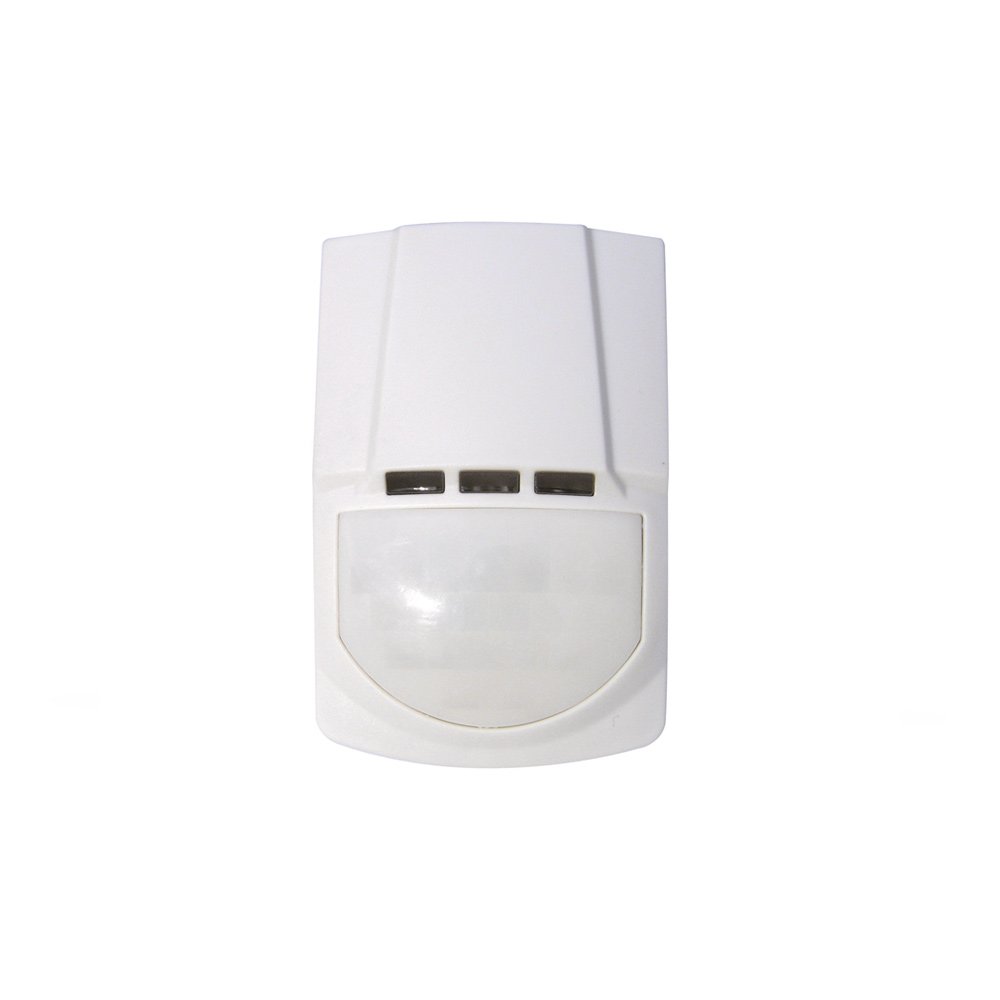
Description
Key Features:
- Multi-Element Sensitivity: Utilizes four PIR sensors to detect infrared radiation emitted by bodies in motion. This multiple sensor approach reduces false alarms as it requires multiple sensors to detect movement before triggering an alert.
- Wide Coverage Area: Due to multiple sensors, these detectors often have a broader field of view and can cover larger areas more effectively than single-element detectors.
- High Detection Capability: More sensitive to small and gradual movements, as well as quicker temperature changes in the environment.
- Advanced Signal Processing: Incorporates sophisticated algorithms to analyze the signals from each sensor, enhancing the ability to distinguish between actual intruders and false triggers such as pets or environmental changes.
- Tamper-Resistant Features: Often built with anti-tamper switches and sturdy casing to prevent manipulation or sabotage.
- Adjustable Sensitivity Settings: Allows customization according to the specific needs of the installation site, helping to further minimize false alarms.
Technical Specifications (Hypothetical Example):
- Detection Method: Four-element PIR sensor.
- Coverage Area: Varies with installation height, commonly up to 12 meters in diameter.
- Sensitivity Levels: Adjustable sensitivity for each sensor.
- Power Supply: Typically 9-16V DC.
- Installation Height: Recommended between 2.4m and 3.5m for optimal performance.
- Detection Angle: Often up to 90-120 degrees per sensor, with overlapping fields to cover 360 degrees if installed appropriately.
- Output Type: Relay outputs with selectable NO/NC (Normally Open/Normally Closed) settings.
- Pet Immunity: Capable of ignoring smaller animals up to a certain weight (e.g., 25 kg) depending on settings.
- Operating Temperature Range: Usually from -10°C to +55°C.
Applications:
- Commercial and Industrial: Suitable for monitoring warehouses, factory floors, and large commercial spaces where high-level security is essential.
- Residential: Effective in large homes, especially in areas like hallways or main living spaces.
- Institutional: Can be used in schools, hospitals, and other institutions for monitoring corridors and large open spaces.
- Outdoor Areas: Some models are designed for outdoor use, providing security for perimeter areas or large outdoor common spaces.
Installation Tips:
- Avoid Direct Sunlight: Place the detector in a location where it will not face direct sunlight, which could trigger false alarms.
- Consider Environmental Factors: Avoid areas where heating vents, fans, or other moving objects could affect the sensors.
- Height Consideration: Install at the recommended height to optimize the detector’s field of view and sensitivity.
- Testing and Adjustment: After installation, test the system thoroughly to adjust the sensitivity and ensure all areas are covered effectively.
Benefits:
- Reduced False Alarms: The use of multiple sensors allows for more accurate detection and fewer false triggers.
- Enhanced Security: Provides high-level security monitoring with improved detection capabilities.
- Flexibility in Application: Adjustable settings and comprehensive coverage make it suitable for a variety of environments.
- Durable and Reliable: Designed to withstand various environmental conditions and potential tampering.
Quad Infrared Intrusion Detectors are an advanced choice for those needing reliable, comprehensive security coverage, particularly in environments where high accuracy and minimal false alarms are crucial.


