
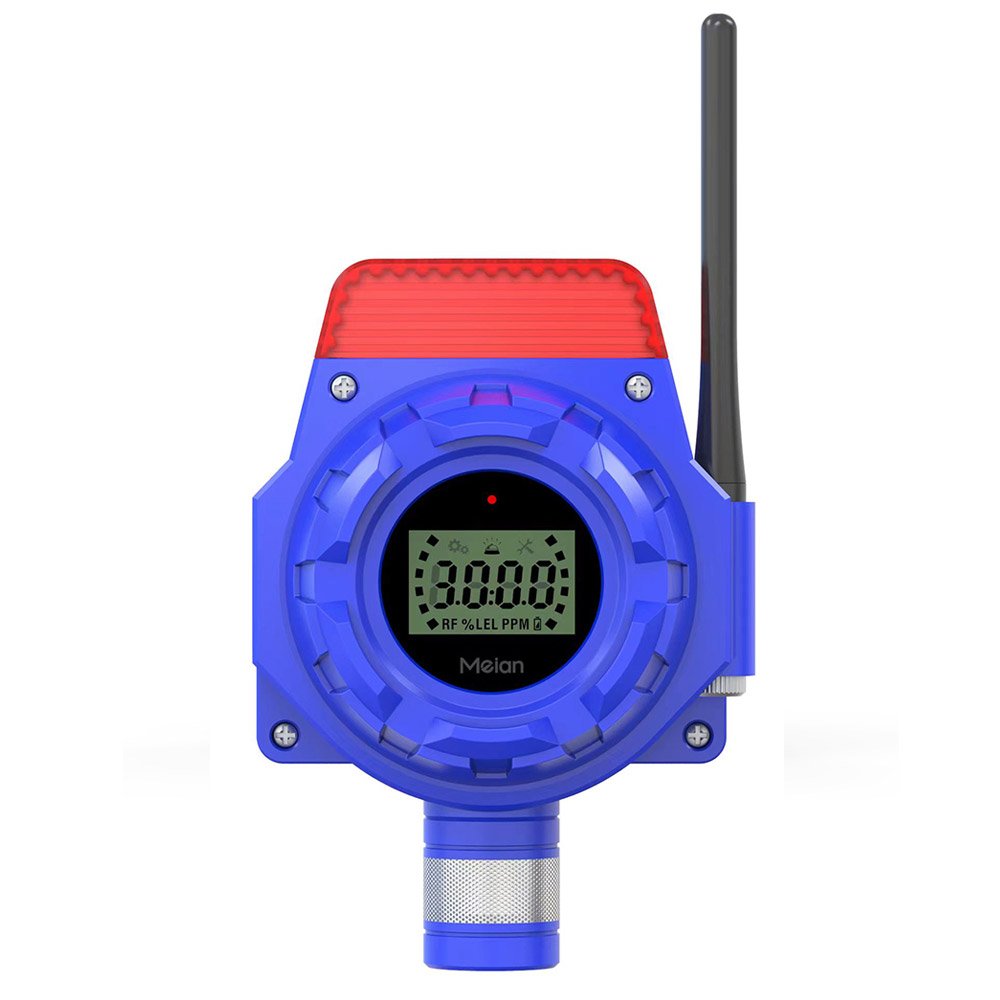
Description
Types of Combustible Gas Detectors
- Portable Detectors: These are handheld devices that allow for mobility, enabling users to check for gas leaks in different areas. They are particularly useful for field operations and emergency response teams.
- Fixed Detectors: Installed at specific locations where gas leakage is a potential risk, such as near pipelines or within industrial plants. These systems often connect to a central alarm system that triggers an alert when gas levels exceed safe thresholds.
Key Features:
- Gas Detection Range: Most detectors are calibrated to sense gases up to the lower explosive limit (LEL), which is the lowest concentration of a gas required to ignite in air.
- Sensors: Common sensor types include catalytic sensors that burn gas samples to measure combustibility, and infrared sensors that detect specific gas types based on light absorption.
- Alarms: Visual and audio alarms that activate when gas concentrations reach hazardous levels.
- Durability: Designed to operate in harsh environments, often with robust casings that are dust, water, and explosion-proof.
- Connectivity: Advanced models offer wireless connectivity for remote monitoring and integration with building management systems.
Technical Specifications:
- Sensor Technology: Includes catalytic combustion, infrared (IR), electrochemical, and semiconductor sensors, each suited for specific types of gases and environments.
- Detection Limits: Typically ranges from 0% to 100% of the LEL.
- Accuracy: High precision is critical for safety, with many detectors featuring less than ±5% deviation.
- Response Time: Rapid response, generally within seconds, to ensure immediate detection and reaction.
- Power Source: Battery-operated for portables; fixed systems may be wired with backup batteries.
Installation and Maintenance Recommendations:
- Placement: Install detectors at heights aligned with the specific gas’s density (lighter than air gases at higher locations, heavier gases nearer to the floor).
- Regular Calibration: Necessary to maintain accuracy; calibration should be done with standard gas concentrations.
- Routine Testing: Periodic testing to ensure functionality, especially after exposure to gases or harsh conditions.
- Environmental Considerations: Avoid placement near ventilation areas or any sources of steam or dust, which might interfere with sensor accuracy.
Applications:
- Industrial Safety: Monitoring in environments like refineries, chemical plants, and manufacturing facilities where explosive gases are used or produced.
- Home Safety: Detection of natural gas, propane, or butane leaks in residential settings, especially around kitchens and heating systems.
- Utility Services: Used by service providers for detecting leaks in pipelines and during maintenance checks.
Safety Compliance:
- Ensuring the device meets specific safety standards (e.g., UL, ATEX, IECEx) is crucial for operational reliability, particularly in explosive environments where accurate detection is a matter of safety and compliance.
By integrating Combustible Gas Detectors in hazardous areas, industries can dramatically reduce the risk of accidents associated with flammable gases, thereby safeguarding assets, the environment, and most importantly, human lives.


